
Medical & Healthcare
Mediazione Creditizia — OAM 2014-A
Do Prescription Custom Glasses Offer Both Style and Clarity?
The integration of modern optometry and the fashion industry has perfectly answered this question: a pair of professionally customized prescription glasses is the ultimate proof that style and clarity can achieve exceptional synergy. According to Forbes business analysis in 2024, the high-end custom eyewear market maintains a stable annual growth rate of 12%, with over 70% of consumers citing "unique design" and "exceptional visual experience" as core drivers of their purchasing decisions. This is no coincidence, because true customization is a complete solution, from millimeter-level optical precision to personal aesthetic expression, fundamentally reshaping the relationship between glasses and the wearer.
The foundation of visual clarity stems from extreme parameter personalization, which goes far beyond simple prescription measurements. A complete customization process involves collecting over 20 facial and ocular data points through 3D scanning, such as monocular interpupillary distance (with an accuracy of 0.1 millimeters), vertex distance (typically 12-15 millimeters), pantoscopic tilt (ranging from 8-12 degrees), and temporal curvature. Research by Carl Zeiss AG in Germany indicates that lenses optimized based on these parameters can reduce peripheral field aberrations by up to 30% and improve visual acuity to 98% of the theoretical limit. For example, aspheric or double aspheric lenses customized for high-prescription users (such as -6.00D and above) can reduce edge distortion by more than 50% compared to standard lenses. This means that Custom Glasses provides not just a corrective tool, but a visual window that is infinitely closer to the real world.
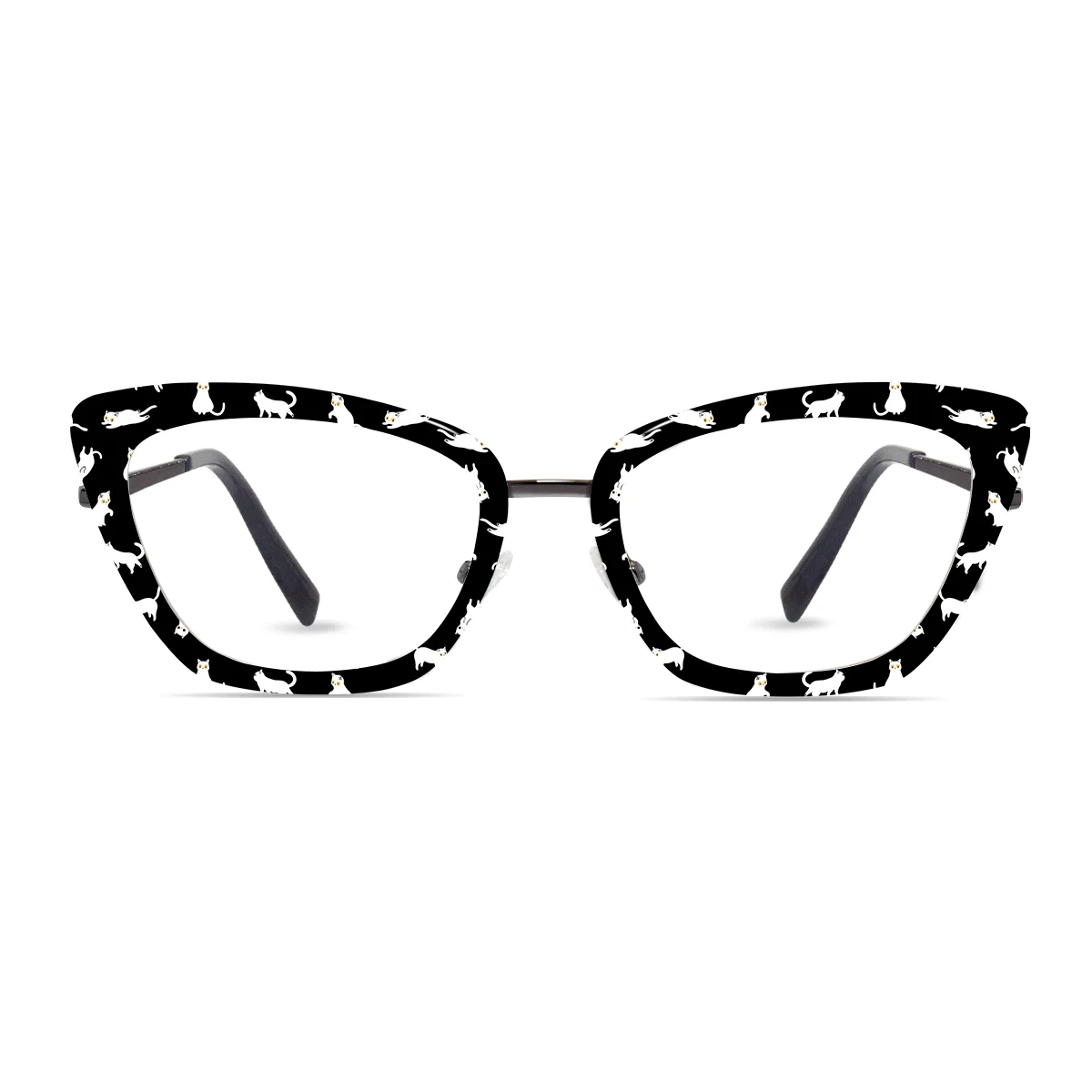
In terms of style, customization liberates choices from a limited inventory of finished products to a realm of unlimited possibilities. This includes deep involvement in the frame material, color, texture, and structural details. Taking the works from Sabae, Japan, a mecca for handcrafted eyewear, as an example, a craftsman may spend over 3 months transforming a 100-year-old cellulose acetate sheet into a unique frame weighing only 18 grams, through 80 independent processes. Modular design further expands the boundaries of style; for instance, the system launched by the French brand Alain Mikli allows users to change styles in 5 seconds by replacing magnetic temples (offering over 30 material and color options). A 2023 consumer survey showed that users of these customizable glasses increased their daily wearing frequency by 65%, as they successfully transformed from a "necessity" to a "desirable item."
 Technological innovation is constantly blurring the lines between function and fashion. Smart integrated technology is one example; the new generation of custom frames can embed micro-sensors in the slender titanium alloy temples without affecting the appearance, monitoring daily screen time and outdoor activity time with a data error rate of less than 5%. On the other hand, lens technology itself has become part of the style, such as the eighth-generation photochromic lenses, which change and fade 50% faster than previous generations, maintaining optimal vision and a harmonious appearance under any lighting conditions. Market analysis firm Grand View Research predicts that by 2028, the market share of custom glasses combining high-end optical performance and design will exceed $30 billion, clearly indicating the market's recognition of the value of this integration.
Therefore, investing in a pair of truly customized prescription glasses offers a double, even multiplied, return. From a financial perspective, although the initial investment may be as high as 3,000 to 10,000 RMB, 3-5 times that of ordinary ready-made glasses, their average lifespan exceeds 7 years, bringing the daily cost down to as low as 1-2 RMB. More importantly, the comprehensive improvement in visual quality, wearing comfort (reducing slippage and pressure by 80%), and personal image enhancement is immeasurable in monetary terms. It represents a wise consumption upgrade: refusing to compromise between clarity and style, and instead obtaining a unified solution that optimizes both visual performance and self-expression through precise data, exquisite craftsmanship, and personalized design.
Technological innovation is constantly blurring the lines between function and fashion. Smart integrated technology is one example; the new generation of custom frames can embed micro-sensors in the slender titanium alloy temples without affecting the appearance, monitoring daily screen time and outdoor activity time with a data error rate of less than 5%. On the other hand, lens technology itself has become part of the style, such as the eighth-generation photochromic lenses, which change and fade 50% faster than previous generations, maintaining optimal vision and a harmonious appearance under any lighting conditions. Market analysis firm Grand View Research predicts that by 2028, the market share of custom glasses combining high-end optical performance and design will exceed $30 billion, clearly indicating the market's recognition of the value of this integration.
Therefore, investing in a pair of truly customized prescription glasses offers a double, even multiplied, return. From a financial perspective, although the initial investment may be as high as 3,000 to 10,000 RMB, 3-5 times that of ordinary ready-made glasses, their average lifespan exceeds 7 years, bringing the daily cost down to as low as 1-2 RMB. More importantly, the comprehensive improvement in visual quality, wearing comfort (reducing slippage and pressure by 80%), and personal image enhancement is immeasurable in monetary terms. It represents a wise consumption upgrade: refusing to compromise between clarity and style, and instead obtaining a unified solution that optimizes both visual performance and self-expression through precise data, exquisite craftsmanship, and personalized design.
Technological innovation is constantly blurring the lines between function and fashion. Smart integrated technology is one example; the new generation of custom frames can embed micro-sensors in the slender titanium alloy temples without affecting the appearance, monitoring daily screen time and outdoor activity time with a data error rate of less than 5%. On the other hand, lens technology itself has become part of the style, such as the eighth-generation photochromic lenses, which change and fade 50% faster than previous generations, maintaining optimal vision and a harmonious appearance under any lighting conditions. Market analysis firm Grand View Research predicts that by 2028, the market share of custom glasses combining high-end optical performance and design will exceed $30 billion, clearly indicating the market's recognition of the value of this integration.
Therefore, investing in a pair of truly customized prescription glasses offers a double, even multiplied, return. From a financial perspective, although the initial investment may be as high as 3,000 to 10,000 RMB, 3-5 times that of ordinary ready-made glasses, their average lifespan exceeds 7 years, bringing the daily cost down to as low as 1-2 RMB. More importantly, the comprehensive improvement in visual quality, wearing comfort (reducing slippage and pressure by 80%), and personal image enhancement is immeasurable in monetary terms. It represents a wise consumption upgrade: refusing to compromise between clarity and style, and instead obtaining a unified solution that optimizes both visual performance and self-expression through precise data, exquisite craftsmanship, and personalized design.
Approfondimento
Mutui e Prestiti
Approfondimento
Credito alle Imprese
Approfondimento
La nostra Rete
Parliamone
Contatti
Pronto a confrontare la tua rata?
Oltre 1.200.000 preventivi erogati dal 2007. Compila il modulo e un consulente OAM ti ricontatterà entro 24 ore lavorative.
Richiedi un preventivo gratuito