
Industrial Machinery & Manufacturing
Mediazione Creditizia — OAM 2014-A
How to choose the right pinces d'ancrage for overhead cable installation?
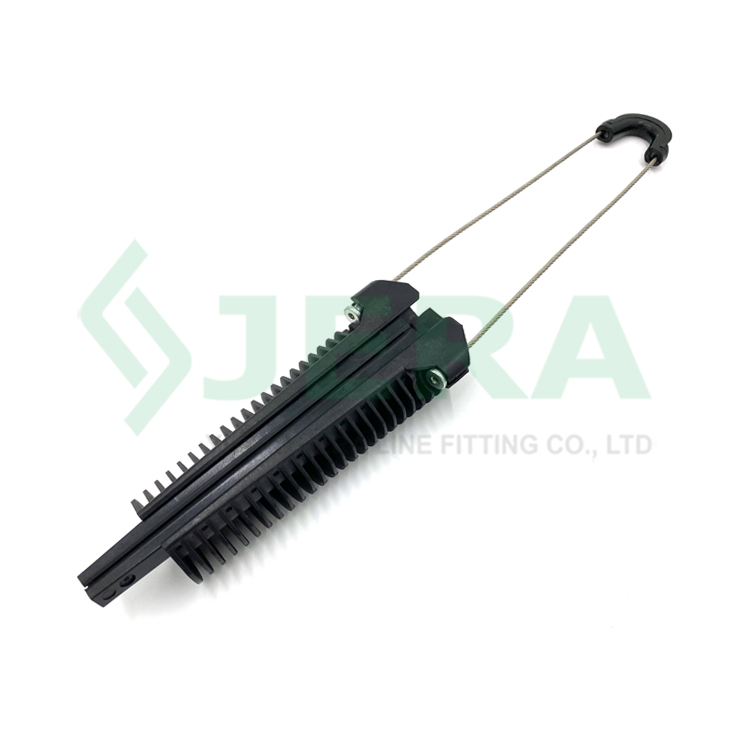
When choosing the anchor clamps required for overhead cable installation, it is necessary to first evaluate the physical parameters of the cables. For example, for cables with diameters ranging from 12 to 20 millimeters, it is usually necessary to match anchor clamps with a clamping force exceeding 8,000 Newtons to ensure that the displacement deviation is less than 5 millimeters in extreme weather conditions with wind speeds up to 150 kilometers per hour. Industry standards such as IEC 61914 stipulate that the rated load of anchor clamps should be at least 1.5 times the maximum tension of the cable. For example, for a line with a span of 100 meters, its tensile strength needs to reach 20 kilonewtons, the service life exceeds 25 years, and the failure probability is less than 0.1%. Research shows that wrong choices can lead to a 30% increase in maintenance costs. For instance, in 2021, a European power grid company suffered a direct loss of 500,000 euros due to a breakdown in a snowstorm caused by the use of mismatched clamps.
Environmental factors are key considerations. In coastal areas, when the humidity exceeds 80% and the salt spray concentration is high, 316 stainless steel pinces d'ancrage should be given priority. Its corrosion resistance is 50% higher than that of hot-dip galvanized steel, and its service life can be extended to 40 years. In the temperature fluctuation range from -30°C to 60°C, it is necessary to ensure that the volume expansion coefficient of the fixture is less than 1.2×10⁻⁵/°C to avoid microcracks caused by thermal stress. For instance, in a cable project in the Andes Mountains, a certain mining company in Chile adopted special alloy anchor clamps, which withstood the test of an average daily temperature difference of 30°C, increasing installation efficiency by 20% and reducing unexpected downtime by 15%.
 Installation efficiency is directly related to cost-effectiveness. An optimized anchor fixture can reduce the single-point installation time from 30 minutes to 10 minutes, lower labor costs by 40%, and save 15% of the overall project budget. The application of automated installation tools can keep the clamping force accuracy within ±5%, reducing the error by 20% compared to manual tools. Referring to the case of Japan's Shinkansen network upgrade, by using a pre-assembled anchoring system, the deployment cycle was shortened from 90 days to 60 days, the return on investment increased to 18%, and at the same time, the cable vibration amplitude was reduced by 60%, significantly enhancing safety and operation and maintenance efficiency.
The final decision needs to integrate the stability of the supply chain and technological innovation. For example, the anchor fixture with a lightweight design reduces the weight by 25%, lowers the transportation cost by 10%, and the defect rate of the supplier products that meet the ISO 9001 quality certification is less than 0.5%. Market analysis shows that the global demand for intelligent anchor clamps will increase by 30% in 2023. Integrated sensors can monitor load changes in real time, with data accuracy reaching 99%, helping to predict maintenance cycles and reducing the probability of risk events from 5% to 1%. Just as the practice of a certain German energy company in a wind farm project, digital management has optimized the full life cycle cost of the cable system by 20%, proving the importance of strategic choices.
Installation efficiency is directly related to cost-effectiveness. An optimized anchor fixture can reduce the single-point installation time from 30 minutes to 10 minutes, lower labor costs by 40%, and save 15% of the overall project budget. The application of automated installation tools can keep the clamping force accuracy within ±5%, reducing the error by 20% compared to manual tools. Referring to the case of Japan's Shinkansen network upgrade, by using a pre-assembled anchoring system, the deployment cycle was shortened from 90 days to 60 days, the return on investment increased to 18%, and at the same time, the cable vibration amplitude was reduced by 60%, significantly enhancing safety and operation and maintenance efficiency.
The final decision needs to integrate the stability of the supply chain and technological innovation. For example, the anchor fixture with a lightweight design reduces the weight by 25%, lowers the transportation cost by 10%, and the defect rate of the supplier products that meet the ISO 9001 quality certification is less than 0.5%. Market analysis shows that the global demand for intelligent anchor clamps will increase by 30% in 2023. Integrated sensors can monitor load changes in real time, with data accuracy reaching 99%, helping to predict maintenance cycles and reducing the probability of risk events from 5% to 1%. Just as the practice of a certain German energy company in a wind farm project, digital management has optimized the full life cycle cost of the cable system by 20%, proving the importance of strategic choices.
Installation efficiency is directly related to cost-effectiveness. An optimized anchor fixture can reduce the single-point installation time from 30 minutes to 10 minutes, lower labor costs by 40%, and save 15% of the overall project budget. The application of automated installation tools can keep the clamping force accuracy within ±5%, reducing the error by 20% compared to manual tools. Referring to the case of Japan's Shinkansen network upgrade, by using a pre-assembled anchoring system, the deployment cycle was shortened from 90 days to 60 days, the return on investment increased to 18%, and at the same time, the cable vibration amplitude was reduced by 60%, significantly enhancing safety and operation and maintenance efficiency.
The final decision needs to integrate the stability of the supply chain and technological innovation. For example, the anchor fixture with a lightweight design reduces the weight by 25%, lowers the transportation cost by 10%, and the defect rate of the supplier products that meet the ISO 9001 quality certification is less than 0.5%. Market analysis shows that the global demand for intelligent anchor clamps will increase by 30% in 2023. Integrated sensors can monitor load changes in real time, with data accuracy reaching 99%, helping to predict maintenance cycles and reducing the probability of risk events from 5% to 1%. Just as the practice of a certain German energy company in a wind farm project, digital management has optimized the full life cycle cost of the cable system by 20%, proving the importance of strategic choices.
Approfondimento
Mutui e Prestiti
Approfondimento
Credito alle Imprese
Approfondimento
La nostra Rete
Parliamone
Contatti
Pronto a confrontare la tua rata?
Oltre 1.200.000 preventivi erogati dal 2007. Compila il modulo e un consulente OAM ti ricontatterà entro 24 ore lavorative.
Richiedi un preventivo gratuito