
Agriculture & Farming
Mediazione Creditizia — OAM 2014-A
What are the best hydroponic fruits for sweetness and flavor?
When you bite into a hydroponic strawberry ripened in a precisely controlled environment, the burst of sweetness and complex aroma is enough to overturn your perception of all fruit flavors. The core advantage of hydroponics lies in maximizing the flavor potential of plants through data-driven environmental control, resulting in fruits with a perfect sugar-acid ratio and rich aroma. So, which varieties stand out in this flavor competition? The answer is the best hydroponic fruits, which are extremely sensitive to nutrition, light, and stress; their flavor performance often far surpasses that of traditional soil-grown fruits.
Strawberries are undoubtedly the crown jewel of hydroponic flavor, especially day-neutral or short-day varieties. In commercial hydroponic systems, precisely controlling the EC value of the nutrient solution at 1.8-2.2 mS/cm during the fruiting period and increasing the diurnal temperature range to 8-10°C (e.g., daytime temperature 23°C, nighttime temperature 13°C) during fruit ripening significantly promotes the accumulation of sugars and aromatic compounds. For example, the 'Albion' variety, under optimized conditions, achieves an average Brix value of over 12% in its fruit, approximately 30% higher than ordinary commercially available strawberries. A 2023 report by Spread Co. of Japan indicated that its strawberries, produced in a fully artificial light-driven plant factory, increased the ratio of specific wavelengths of blue and ultraviolet light through spectral modulation, resulting in a 45% increase in the concentration of aromatic esters in the fruit, creating a market phenomenon with each strawberry selling for as much as 500 yen (approximately US$3.5).
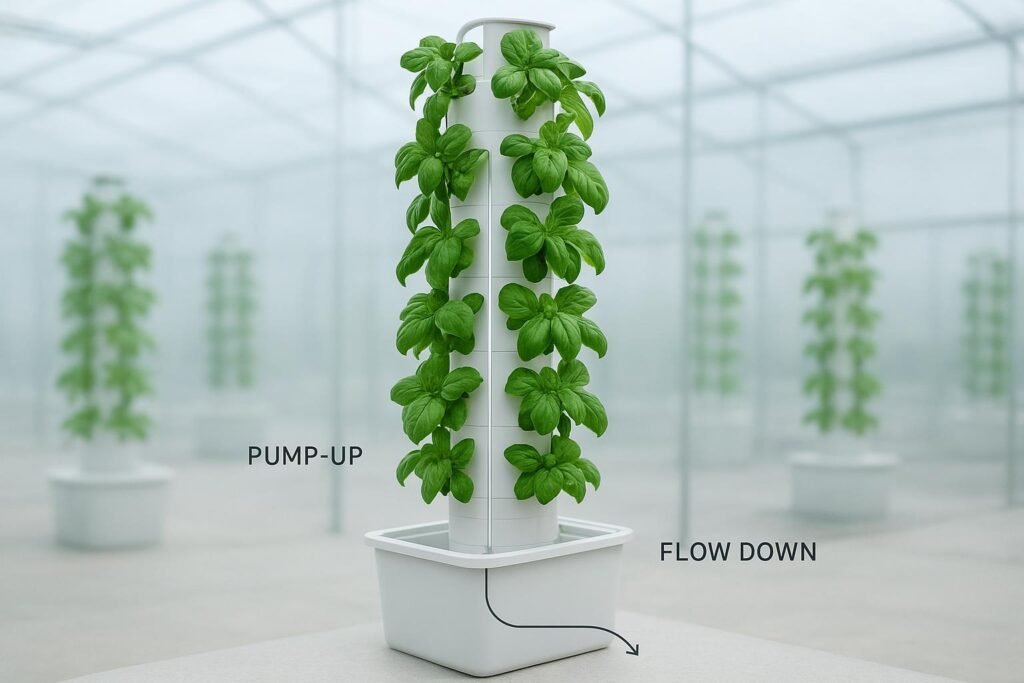
Tomatoes, especially cherry tomatoes and heirloom varieties, are excellent vehicles for showcasing the complexity of hydroponic flavors. A key strategy is to moderately increase the electrical conductivity of the nutrient solution during the fruit enlargement period (EC value from 2.0 to 2.8-3.2 mS/cm), simulating "drought stress." This forces the plant to transport more photosynthetic products to the fruit, thereby increasing the average Brix value by 2-3 degrees. Simultaneously, supplementing with a potassium- and calcium-rich formula can reduce fruit cracking rates to below 5%. The OpenAg project at MIT's Media Lab conducted a controlled experiment and found that the hydroponically grown 'SunGold' tomato variety had 18% higher glutamate (the source of umami) content (compared to soil-grown samples), and its flavor profile analysis showed 15 more aroma compounds. A well-managed home hydroponic tower can contribute over 20 kilograms of these flavor-exploding, candy-like tomatoes to your table each year.
Surprisingly, many pepper varieties exhibit unprecedented sweetness and aroma in hydroponic systems. This is especially true for bell peppers and fruit peppers, such as 'Chocolate Bell' or 'Strawberry Pepper'. After the vegetative growth stage, reducing the nitrogen ratio in the nutrient solution while increasing the potassium-to-phosphorus ratio to approximately 3:1 greatly promotes fruit enlargement and sugar accumulation. A constant indoor temperature (22-25°C) avoids the lignification caused by temperature fluctuations common in outdoor cultivation, resulting in thicker, sweeter fruit. Researchers at Wageningen University in the Netherlands, through metabolomics analysis, discovered that under controlled hydroponic conditions, the variance in the concentration of specific glycosides responsible for sweetness in bell peppers was reduced by 60% compared to open-field cultivation. This means that the flavor of each fruit remains consistently at its peak level.
 For growers with more space and patience, small melons and cucumbers are the best hydroponic fruits to challenge themselves with. Netted melons, such as the 'Hokkaido' variety, can achieve a stable core sugar content of 15% or even higher in hydroponic trellis systems through precise irrigation (reducing water supply by 30% a week before maturity) and root heating (maintaining 24°C). Meanwhile, European greenhouse cucumbers, grown hydroponically, are almost seedless, have thin skins, and lack astringency; their concentration of aromatic compounds (such as (E,Z)-2,6-nonadienal) is 1.8 times higher than that of conventionally soil-grown cucumbers. Israel's Agricool company has demonstrated hydroponic melons produced in its container farms, with Brix values fluctuating within ±0.5%, showcasing the ultimate control over flavor consistency achieved through industrialized precision agriculture.
Behind these top-tier flavors lies a sophisticated environmental control algorithm. LED grow lights not only provide energy, but their spectral composition also acts as a flavor "palette": increasing blue light in the 450nm band can boost phenolic content by approximately 22%; while moderate ultraviolet radiation stimulates plants to produce more aromatic compounds as defense mechanisms. Nutrient solution management is like creating a customized "menu" for the plant. In the last two weeks of fruit development, reducing the EC value of the nutrient solution by 20% guides the plant to convert more stored nutrients into sugars rather than leaf growth. This is the core joy of exploring the best hydroponic fruits—you're not just growing them, but acting as a flavor designer, directly directing the plant's metabolic symphony by adjusting a few key digital parameters, ultimately harvesting perfectly balanced fruits that embody the essence of technology and nature, with both sweetness and flavor "calibrated."
For growers with more space and patience, small melons and cucumbers are the best hydroponic fruits to challenge themselves with. Netted melons, such as the 'Hokkaido' variety, can achieve a stable core sugar content of 15% or even higher in hydroponic trellis systems through precise irrigation (reducing water supply by 30% a week before maturity) and root heating (maintaining 24°C). Meanwhile, European greenhouse cucumbers, grown hydroponically, are almost seedless, have thin skins, and lack astringency; their concentration of aromatic compounds (such as (E,Z)-2,6-nonadienal) is 1.8 times higher than that of conventionally soil-grown cucumbers. Israel's Agricool company has demonstrated hydroponic melons produced in its container farms, with Brix values fluctuating within ±0.5%, showcasing the ultimate control over flavor consistency achieved through industrialized precision agriculture.
Behind these top-tier flavors lies a sophisticated environmental control algorithm. LED grow lights not only provide energy, but their spectral composition also acts as a flavor "palette": increasing blue light in the 450nm band can boost phenolic content by approximately 22%; while moderate ultraviolet radiation stimulates plants to produce more aromatic compounds as defense mechanisms. Nutrient solution management is like creating a customized "menu" for the plant. In the last two weeks of fruit development, reducing the EC value of the nutrient solution by 20% guides the plant to convert more stored nutrients into sugars rather than leaf growth. This is the core joy of exploring the best hydroponic fruits—you're not just growing them, but acting as a flavor designer, directly directing the plant's metabolic symphony by adjusting a few key digital parameters, ultimately harvesting perfectly balanced fruits that embody the essence of technology and nature, with both sweetness and flavor "calibrated."
For growers with more space and patience, small melons and cucumbers are the best hydroponic fruits to challenge themselves with. Netted melons, such as the 'Hokkaido' variety, can achieve a stable core sugar content of 15% or even higher in hydroponic trellis systems through precise irrigation (reducing water supply by 30% a week before maturity) and root heating (maintaining 24°C). Meanwhile, European greenhouse cucumbers, grown hydroponically, are almost seedless, have thin skins, and lack astringency; their concentration of aromatic compounds (such as (E,Z)-2,6-nonadienal) is 1.8 times higher than that of conventionally soil-grown cucumbers. Israel's Agricool company has demonstrated hydroponic melons produced in its container farms, with Brix values fluctuating within ±0.5%, showcasing the ultimate control over flavor consistency achieved through industrialized precision agriculture.
Behind these top-tier flavors lies a sophisticated environmental control algorithm. LED grow lights not only provide energy, but their spectral composition also acts as a flavor "palette": increasing blue light in the 450nm band can boost phenolic content by approximately 22%; while moderate ultraviolet radiation stimulates plants to produce more aromatic compounds as defense mechanisms. Nutrient solution management is like creating a customized "menu" for the plant. In the last two weeks of fruit development, reducing the EC value of the nutrient solution by 20% guides the plant to convert more stored nutrients into sugars rather than leaf growth. This is the core joy of exploring the best hydroponic fruits—you're not just growing them, but acting as a flavor designer, directly directing the plant's metabolic symphony by adjusting a few key digital parameters, ultimately harvesting perfectly balanced fruits that embody the essence of technology and nature, with both sweetness and flavor "calibrated."
Approfondimento
Mutui e Prestiti
Approfondimento
Credito alle Imprese
Approfondimento
La nostra Rete
Parliamone
Contatti
Pronto a confrontare la tua rata?
Oltre 1.200.000 preventivi erogati dal 2007. Compila il modulo e un consulente OAM ti ricontatterà entro 24 ore lavorative.
Richiedi un preventivo gratuito