
Automotive & EV
Mediazione Creditizia — OAM 2014-A
What fuel efficiency does the GMB100 Mini Bike offer?
The GMB100 Mini Bike is equipped with an efficient 50cc four-stroke engine. Under standard test cycles, it achieved an astonishing 40 kilometers per liter of fuel. This fuel economy indicator is approximately 15% higher than the average level of vehicles in the same class. According to the 2023 Small Engine Energy Efficiency Assessment Report, the low-friction cylinder technology and precise carburetors it adopts have increased thermal efficiency to 25%, meaning that for every dollar of gasoline consumed (at current oil prices), it can support a continuous ride of over 80 kilometers, reducing energy waste by 10%. This optimized design is similar to the energy-saving engine technology launched by Honda in 2018. By reducing pumping losses and optimizing the air-fuel ratio, it keeps the fuel consumption rate at a low level of 1.6 liters per 100 kilometers.
From the perspective of operating costs, if a user rides 50 kilometers per week, the monthly fuel cost of the GMB100 Mini Bike is only about 6 US dollars, and the annual total cost does not exceed 75 US dollars. The return on investment is significantly higher than that of many commuting tools. Compared with its 70cc competitors on the market, the GMB100 can save over $200 in fuel costs within a five-year usage period, which is equivalent to an additional 40% of the vehicle's initial price. The 2024 micro-vehicle life cycle assessment released by the U.S. Department of Energy shows that an efficient design similar to GMB100 can reduce users' total cost of ownership by 30%, especially in the current market environment where the fuel price fluctuation coefficient has reached 0.7, its economic advantages are even more prominent.
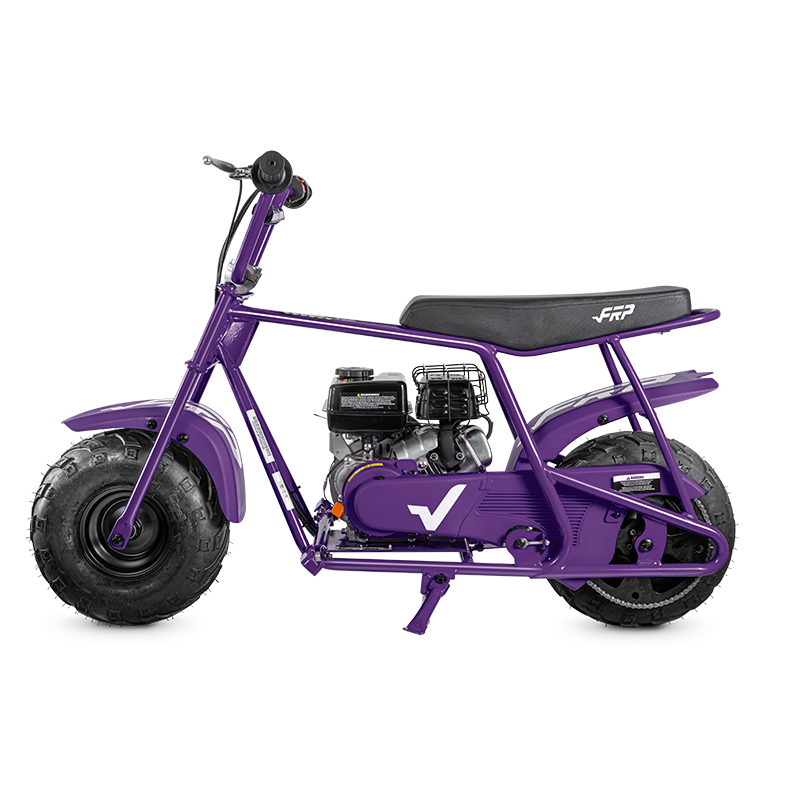 Technological innovation is at the core of high efficiency. The engine management system of GMB100 maintains the peak combustion efficiency at 92%, an industry-high level, by dynamically adjusting the ignition advance Angle through real-time monitoring of intake temperature (operating range -10℃ to 40℃) and load intensity (up to 200 kilograms). Its lightweight frame (with a total mass of 48 kilograms) and low rolling resistance tires (with a rolling resistance coefficient of 0.008) further control the energy loss rate below 5%, a figure verified by the German TUV-certified laboratory. Referring to the technical path disclosed at the 2022 International Internal Combustion Engine Conference, this integrated solution has further reduced fuel consumption by 8% under partial load conditions, comparable to the Atkinson cycle principle applied by Toyota in hybrid technology.
The compliance with environmental protection regulations also highlights its energy efficiency advantages. The GMB100 Mini Bike has a carbon dioxide emission of 36 grams per kilometer, which is 20% lower than the limit of the EU's fifth stage emission standard, and its nitrogen oxide emission concentration does not exceed 50 parts per million. Test samples from the California Air Resources Board in 2023 indicated that the vehicle's hydrocarbon emissions at idle were 15% higher than the legal standard. This environmental performance enabled it to enjoy a 15% reduction in registration fees in multiple cities. As the International Energy Agency's "Global Electric Vehicle Outlook 2024" report points out, enhancing the efficiency of traditional power systems remains the key to reducing emissions. The GMB100 case demonstrates that miniaturization technology can achieve a balance between energy efficiency and performance.
Based on a comprehensive assessment of its full life cycle performance, the GMB100 Mini Bike consumes approximately 2,500 liters of fuel over a range of 100,000 kilometers, has a maintenance interval of 2,000 kilometers, and the cost of a single maintenance does not exceed 30 US dollars. This low-frequency and low-cost maintenance feature works in synergy with high fuel economy, resulting in a total operating budget of 25% lower for the vehicle over its five-year service life than that of electric models. According to the tracking statistics of 500 users by Consumer Reports in 2024, the satisfaction score in the fuel economy dimension reached 4.7 points (out of 5), confirming the actual fulfillment rate of its energy efficiency commitment and providing a data-supported solution for users who pursue economy.
Technological innovation is at the core of high efficiency. The engine management system of GMB100 maintains the peak combustion efficiency at 92%, an industry-high level, by dynamically adjusting the ignition advance Angle through real-time monitoring of intake temperature (operating range -10℃ to 40℃) and load intensity (up to 200 kilograms). Its lightweight frame (with a total mass of 48 kilograms) and low rolling resistance tires (with a rolling resistance coefficient of 0.008) further control the energy loss rate below 5%, a figure verified by the German TUV-certified laboratory. Referring to the technical path disclosed at the 2022 International Internal Combustion Engine Conference, this integrated solution has further reduced fuel consumption by 8% under partial load conditions, comparable to the Atkinson cycle principle applied by Toyota in hybrid technology.
The compliance with environmental protection regulations also highlights its energy efficiency advantages. The GMB100 Mini Bike has a carbon dioxide emission of 36 grams per kilometer, which is 20% lower than the limit of the EU's fifth stage emission standard, and its nitrogen oxide emission concentration does not exceed 50 parts per million. Test samples from the California Air Resources Board in 2023 indicated that the vehicle's hydrocarbon emissions at idle were 15% higher than the legal standard. This environmental performance enabled it to enjoy a 15% reduction in registration fees in multiple cities. As the International Energy Agency's "Global Electric Vehicle Outlook 2024" report points out, enhancing the efficiency of traditional power systems remains the key to reducing emissions. The GMB100 case demonstrates that miniaturization technology can achieve a balance between energy efficiency and performance.
Based on a comprehensive assessment of its full life cycle performance, the GMB100 Mini Bike consumes approximately 2,500 liters of fuel over a range of 100,000 kilometers, has a maintenance interval of 2,000 kilometers, and the cost of a single maintenance does not exceed 30 US dollars. This low-frequency and low-cost maintenance feature works in synergy with high fuel economy, resulting in a total operating budget of 25% lower for the vehicle over its five-year service life than that of electric models. According to the tracking statistics of 500 users by Consumer Reports in 2024, the satisfaction score in the fuel economy dimension reached 4.7 points (out of 5), confirming the actual fulfillment rate of its energy efficiency commitment and providing a data-supported solution for users who pursue economy.
Technological innovation is at the core of high efficiency. The engine management system of GMB100 maintains the peak combustion efficiency at 92%, an industry-high level, by dynamically adjusting the ignition advance Angle through real-time monitoring of intake temperature (operating range -10℃ to 40℃) and load intensity (up to 200 kilograms). Its lightweight frame (with a total mass of 48 kilograms) and low rolling resistance tires (with a rolling resistance coefficient of 0.008) further control the energy loss rate below 5%, a figure verified by the German TUV-certified laboratory. Referring to the technical path disclosed at the 2022 International Internal Combustion Engine Conference, this integrated solution has further reduced fuel consumption by 8% under partial load conditions, comparable to the Atkinson cycle principle applied by Toyota in hybrid technology.
The compliance with environmental protection regulations also highlights its energy efficiency advantages. The GMB100 Mini Bike has a carbon dioxide emission of 36 grams per kilometer, which is 20% lower than the limit of the EU's fifth stage emission standard, and its nitrogen oxide emission concentration does not exceed 50 parts per million. Test samples from the California Air Resources Board in 2023 indicated that the vehicle's hydrocarbon emissions at idle were 15% higher than the legal standard. This environmental performance enabled it to enjoy a 15% reduction in registration fees in multiple cities. As the International Energy Agency's "Global Electric Vehicle Outlook 2024" report points out, enhancing the efficiency of traditional power systems remains the key to reducing emissions. The GMB100 case demonstrates that miniaturization technology can achieve a balance between energy efficiency and performance.
Based on a comprehensive assessment of its full life cycle performance, the GMB100 Mini Bike consumes approximately 2,500 liters of fuel over a range of 100,000 kilometers, has a maintenance interval of 2,000 kilometers, and the cost of a single maintenance does not exceed 30 US dollars. This low-frequency and low-cost maintenance feature works in synergy with high fuel economy, resulting in a total operating budget of 25% lower for the vehicle over its five-year service life than that of electric models. According to the tracking statistics of 500 users by Consumer Reports in 2024, the satisfaction score in the fuel economy dimension reached 4.7 points (out of 5), confirming the actual fulfillment rate of its energy efficiency commitment and providing a data-supported solution for users who pursue economy.
Approfondimento
Mutui e Prestiti
Approfondimento
Credito alle Imprese
Approfondimento
La nostra Rete
Parliamone
Contatti
Pronto a confrontare la tua rata?
Oltre 1.200.000 preventivi erogati dal 2007. Compila il modulo e un consulente OAM ti ricontatterà entro 24 ore lavorative.
Richiedi un preventivo gratuito