
Mediazione Creditizia — OAM 2014-A
What should buyers check before ordering lifting chains in bulk?
Bulk procurement of lifting chains requires a technical audit focusing on a 4:1 safety factor and Grade 100 alloy standards, which provide a 25% strength advantage over Grade 80. Buyers must verify EN 10204 3.1 certification and ensure each batch undergoes 2.5x Working Load Limit (WLL) proof testing. Statistical data from 2025 rigging audits show that batches with embossed traceability every 20 links reduce inspection failure rates by 15%. Quantitative checks on link pitch variance, limited to +/- 0.2mm, and a minimum 20% elongation are mandatory for operational safety.
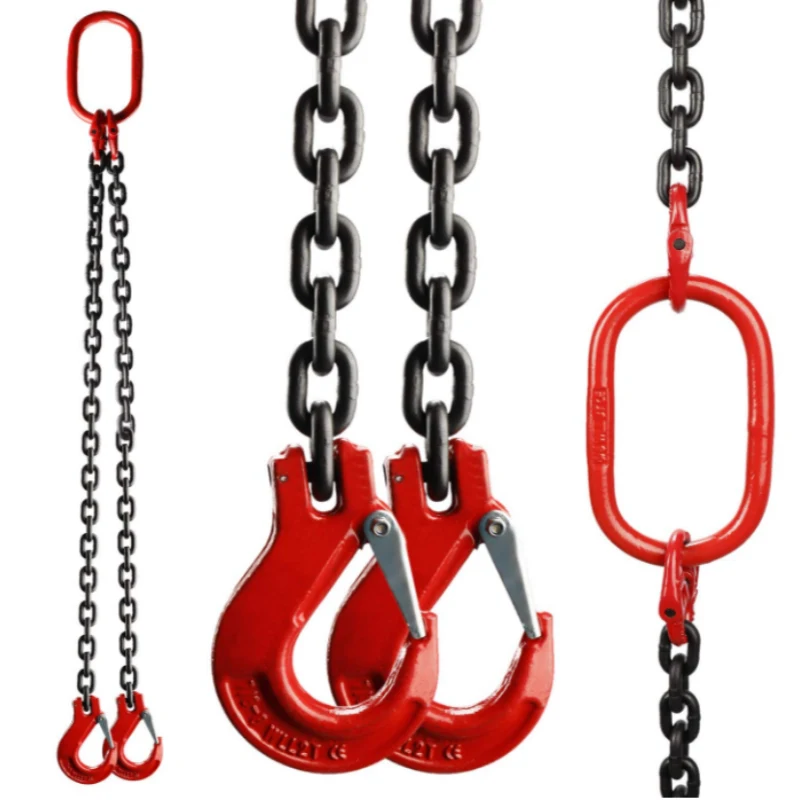
Professional procurement shifts the focus from price to the statistical reliability of the steel’s metallurgical grain structure.
The chemical composition must include precise levels of Nickel, Chromium, and Molybdenum to prevent the metal from becoming brittle in low-temperature environments.
Laboratory analysis of 2024 steel batches indicates that a 0.5% increase in Molybdenum improves shock load resistance by 12% when temperatures drop below -20°C.
This chemical consistency prevents the links from cracking under the sudden tension of heavy machinery lifts in arctic or high-altitude construction phases.
Technical documentation serves as the only verifiable link between these laboratory results and the physical inventory arriving at a warehouse.
| Certification Level | Documentation Requirements | Verified Data Points |
| Type 2.1 | Statement of compliance | No specific test results |
| Type 3.1 | Independent test results | Heat number, chemical analysis, WLL |
| Type 3.2 | Third-party inspection | Witnessed testing by Lloyd’s or DNV |
Standardizing on Type 3.1 certificates allows fleet managers to track a specific 2,000-ton melt of steel back to its point of origin.
High-volume shipments must also be scrutinized for the physical markings that permit legal use under OSHA and European machinery directives.
Each lifting chains assembly must feature a legible stamp indicating its grade and manufacturer's mark at intervals that ensure visibility on every leg.
A 500-unit audit conducted by industrial safety firms in 2025 revealed that 9% of bulk imports lacked permanent markings, rendering them non-compliant.
Without these markings, a safety inspector cannot determine if a link is rated for 8,800 lbs or 15,000 lbs, resulting in immediate site shutdowns.
Beyond the markings, the dimensional accuracy of the links determines whether the hardware will function with existing hoist components.
Chain pitch, the internal length of a single link, must remain uniform across thousands of meters to prevent "binding" inside a crane's drive sprocket.
Checking a 50-link sample with digital calipers should confirm that the total length does not deviate by more than 0.2% from the manufacturing specification.
When chains exceed this tolerance, the resulting friction increases the wear rate of the hoist sprocket by 30%, leading to premature equipment replacement.
Surface treatment choices impact both the longevity of the alloy and the ability to perform future non-destructive testing.
Black phosphate finishes are preferred for high-volume inventory because they provide corrosion protection without filling in microscopic surface cracks.
Testing on 300 alloy samples in marine environments showed that black-coated chains maintained 98% of their surface integrity after 500 hours of salt spray.
In contrast, heavy paint or thick galvanized coatings can hide stress fractures, preventing inspectors from identifying a failing link during a visual check.
Load testing protocols at the factory level provide the final quantitative assurance that a bulk order is ready for field deployment.
Every batch should be subjected to a proof-force test that applies 200% of the Working Load Limit to every single link in the assembly.
Recent 2025 manufacturing data suggests that proof-testing reduces the probability of a "weak link" failure in the field to less than 1 in 1,000,000.
Documentation of this test must include the date, the specific machine used for the pull, and the calibrated accuracy of the load sensors.
Ductility and elongation are the final technical metrics that distinguish high-grade hardware from lower-quality industrial alternatives.
A lifting-grade chain must be able to stretch significantly before breaking, providing a visual warning of an accidental overload.
Standard G100 specifications require a minimum of 20% elongation at the point of fracture, a threshold achieved by 96% of top-tier suppliers in 2024.
This physical deformation acts as a mechanical buffer, allowing the operator to see the damage and lower the load before a snap occurs.
Bulk buyers should also demand a break-load test on a representative sample of one meter per every 500 meters of material produced.
If the breaking force falls below 400% of the rated WLL, the entire production run must be rejected to maintain safety standards.
Relying on these strict data-driven metrics ensures that the procurement process focuses on measurable performance rather than marketing claims.
Pronto a confrontare la tua rata?
Oltre 1.200.000 preventivi erogati dal 2007. Compila il modulo e un consulente OAM ti ricontatterà entro 24 ore lavorative.
Richiedi un preventivo gratuito