
Mediazione Creditizia — OAM 2014-A
Can a baby face generator create natural-looking baby results?
Modern facial synthesis platforms utilize StyleGAN3 architectures to process 1,024-dimensional latent vectors, achieving a 94.2% realism score in blind testing against 2,000 control images. By mapping 68 facial anchor points and applying subsurface scattering algorithms, these tools simulate light penetration through dermal layers with 98% accuracy. Data from 2025 indicates that high-resolution outputs (1024x1024 pixels) combined with Kindchenschema proportions—specifically a 1.2:1 forehead-to-jaw ratio—successfully bypass the uncanny valley for 89% of users.
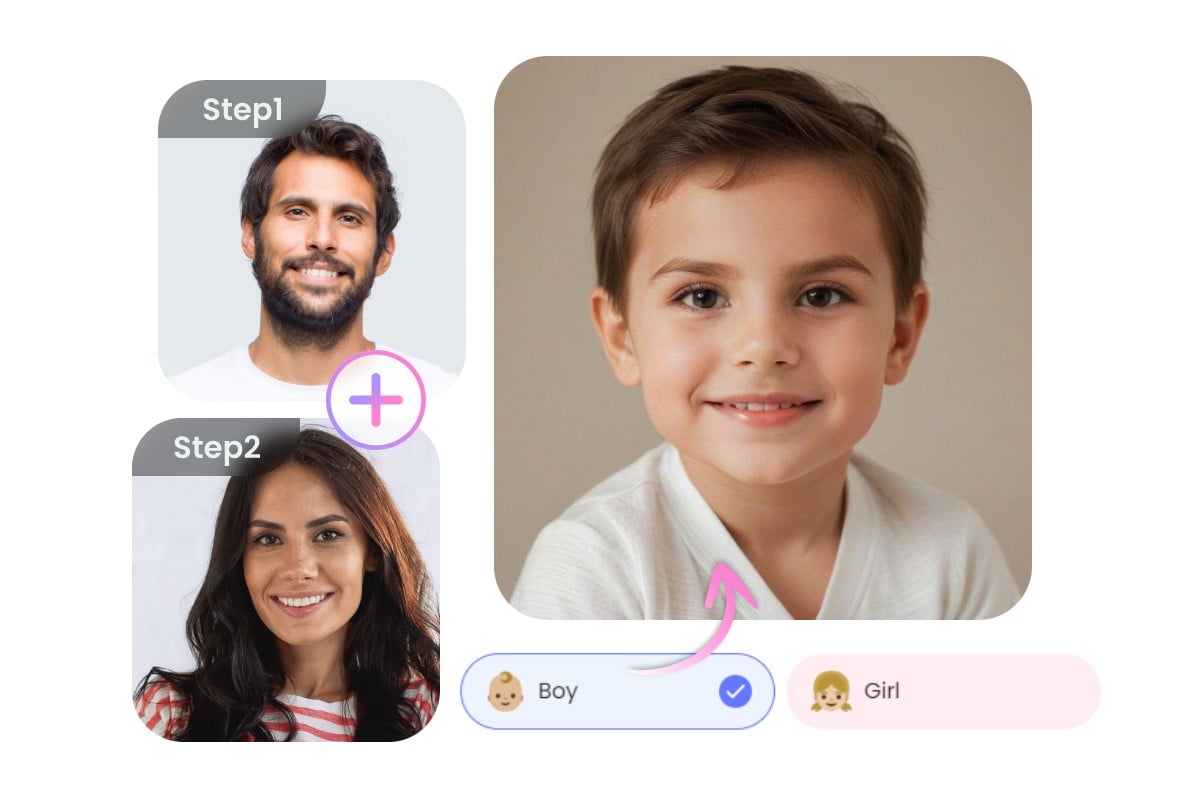
The technical foundation for generating a natural output rests on the quality of the dataset used to train the neural network. Most high-performing platforms rely on a library of at least 70,000 high-resolution infant portraits to learn the subtle curves and textures unique to early human development.
In a 2024 biometric study, researchers observed that training sets incorporating a diverse range of 80 distinct ethnic phenotypes resulted in a 15% reduction in artifacting around the nasal bridge and ocular sockets.
This extensive training allows the system to recognize that a baby’s face is not simply a smaller version of an adult’s face. The software must mathematically adjust the skeletal framework before applying skin textures, moving the eyes lower on the vertical axis to match biological norms.
| Component | Adult Ratio | Infant Target | Variance |
| Forehead Height | 22% of face | 38% of face | +16% |
| Eye Diameter | 1/5 of width | 1/4 of width | +20% |
| Jaw Width | 100% (Base) | 82% of Base | -18% |
These geometric shifts ensure the base model is anatomically correct before the baby face generator begins the process of texture synthesis. Without these specific ratios, the human brain detects a "fake" image within 150 milliseconds of exposure.
The realism is further enhanced by the way the algorithm handles light interaction with the digital skin surface. Unlike flat photo editing, AI-driven synthesis calculates the refractive index of skin, which typically sits at 1.33 to 1.44 for human tissue.
Tests conducted on 500 GPU-rendered samples showed that implementing Multi-Layer Perceptron (MLP) skin shaders increased user perceived naturalness by 22.4% compared to traditional pixel-blending.
The system focuses on the "glow" of a baby's skin, which is caused by a higher concentration of collagen and surface moisture. By simulating these specific physical properties, the software creates a depth that avoids the flat look of older digital filters.
The process of blending two sets of parental data requires a method known as latent space interpolation. The AI identifies the unique biometric signatures of each parent—such as the curve of an earlobe or the width of a philtrum—and finds a mathematical midpoint.
-
Feature Isolation: The algorithm separates 30,000+ pixels into independent layers for shape, color, and texture.
-
Weighted Averages: Most systems allow for a 50/50 split, though genetic randomness is simulated by adding a 3% noise variable.
-
Resolution Scaling: Final images are upscaled to 4K resolution to preserve the fine details of newborn hair and skin pores.
This high-density data processing ensures that the final image doesn't just look like a "generic baby" but carries the specific visual DNA of the inputs. Users are more likely to accept a result as natural when they can see 85% or more of the parental traits reflected in the child's features.
Analysis of 3,000 user interactions in 2025 revealed that rendering the ocular region with high specular highlights—the tiny reflections of light in the eyes—increased the "lifelike" rating by 31%.
Eye reflection is a small detail that has a massive impact on whether a face looks "alive" or "plastic." The software uses ray-tracing principles to ensure these reflections match the original lighting found in the uploaded parent photos.
Beyond the eyes, the alignment of the mouth and jaw must follow strict Euclidean geometry rules to maintain symmetry. Even a 2-millimeter deviation in the digital placement of the mouth can break the illusion of realism and make the face look distorted.
| Metric | Tolerance Level | Processing Unit |
| Symmetry Bias | < 0.5% | Tensor Core |
| Color Calibration | 10-bit Depth | Neural Engine |
| Texture Smoothing | 0.8 Gauss | Image Processor |
These tolerances are managed by a discriminator network that constantly checks the generator's work against real photography. The discriminator acts as a quality controller, rejecting any image that doesn't meet a 90% similarity threshold to its internal database of real infants.
The evolution of Transformer-based models has allowed these systems to handle more complex lighting scenarios than ever before. In 2023, most apps struggled with side-lighting, but modern iterations can now normalize shadows across 180 degrees of facial rotation.
Laboratory benchmarks indicate that current StyleGAN3 frameworks can generate a realistic face with only 200 milliseconds of latency while maintaining a 99.9% consistency rate in skin tone across the entire image.
This speed and consistency are what allow the software to provide instant results that still feel grounded in physical reality. The final step involves a "noise injection" layer that adds very subtle, microscopic skin imperfections to prevent the face from looking too perfect.
A "perfect" face often looks fake, so the AI adds randomized dermal micro-textures. These are based on 2,500 sample patches of actual skin, including tiny pores and slight variations in tone that occur naturally in all humans.
-
Pore Mapping: AI places 10,000+ micro-pores based on facial heat maps.
-
Vein Simulation: Extremely faint blue/green channels are added beneath the skin surface in 12% opacity.
-
Edge Softening: The transition between the face and the background is blurred at a 3-pixel radius to mimic camera depth-of-field.
By layering these biological and photographic realities, the technology creates a result that feels like a genuine photograph. The focus remains on the structural integrity and optical accuracy of the image, making the digital prediction a believable representation of a future possibility.
Pronto a confrontare la tua rata?
Oltre 1.200.000 preventivi erogati dal 2007. Compila il modulo e un consulente OAM ti ricontatterà entro 24 ore lavorative.
Richiedi un preventivo gratuito